
Independent projects
25% of our time is committed to independent (self-funded) projects that let us freely innovate, share knowledge and expand networks by:
Providing FREE workshops that support nonprofit organizations and communities
Conducting research to shape equitable policies
Creating and sharing FREE applications using open government data
The Afterschool Open Data Project
When NYC passed its Open Data Law in 2012, it established the groundwork for local and national governments around the world to follow suit by not just sharing information when asked, but to make information about community programs free and open to the public as a matter of course.
Information about public schools and educational resources is highly relevant to this promise. In a city with 800,000 students, a budget of $44 billion and over 700 public high school programs that require individual applications, access to reliable information is critical if we want to promote equity and opportunity for all.
Data map for parents and caregivers: find free afterschool programs in your neighborhood!
To find what you want, tap on the small box in the upper left of the black banner. This lets you filter by grade and type of afterschool program.
Select the entry grade you want. If you have a child who would be entering 3K in the fall, select ONLY 3K schools.
Select the type of free afterschool program that fits your needs.
COMPASS afterschool is usually on site at elementary or middle schools.
Beacon afterschool can be either on site at a local school or at a local community center and may serve students from multiple neighborhood schools.
Cornerstone youth programs are offered in partnership with NYC Housing Authority projects and local community-based organizations. They serve children to young adults ages 5-21.
User instructions:
Tap on the small square in the upper left of the black banner to open and close the filter list. This lets you quickly find specific schools and programs by neighborhood.
Once you’ve got the list open, start by selecting the checkbox(es) for the entry grade you want (3K, PreK, K). So if you are looking for schools in your neighborhood with 3K classrooms only, tap to uncheck PreK and K and keep the check mark in 3K box. You can search for any or all the grades.
If you want to see the full list of schools or go straight to a school, click on the down arrow directly under the checkbox. This gives you the list of schools where you can tap on a school name to bring up its details.
Scroll down to find the list of DYCD programs and check/uncheck the types of programs you are interested in.
Getting rid of the checks and points on the map will make it easier to zoom in to the neighborhood where you are interested. Similar to schools, you can view individual programs by site. Just tap the down arrow under the check box.
We hope this search tool is helpful. Let us know if you have suggestions or questions!
School data is from NYC MySchool website as of January 2026; DYCD data from NYC Open Data portal January 2026.

Click on the small box in upper left of the title to open or close the filters. Select the grade level and type of afterschool program you want to find
Data tools for community-based care providers and school partners
iframe>
Afterschool search tool for parents
This map was designed to help parents and caregivers find local programs that serve elementary age children.
Check marks in red, orange and gold represent free programs managed by NYC DYCD.
Map points in green, blue and violet represent public schools that include kindergarten.
Filter your map according to the grade and type of afterschool program you want
Zoom into your neighborhood with +/- in lower left and then click on a check mark or map pin for details.
Like most urban school systems, NYC’s extends beyond schools and students to include other community-based resources such as in-school and afterschool enrichment and wrap-around family-wide supports through Community Schools. These highly enriched and diverse education ecosystems partner with community-based nonprofits and others. Partners in the public ecosystem also want more transparent access to resources and evidence in our publicly-funded education environment.
The NYC Afterschool Ecosystem
This web application is a work in progress. It’s designed with afterschool providers and policy makers in mind to serve as a data repository, visualization and research tool that identifies neighborhood resources, needs, City investments and afterschool partnerships.
NYC data is current as of January 2026.
Past projects



Finding your best fit high school
We created this free, easy to use search tool in response to our own experience with high school applications.
Equitable access to elite public schools
Where do students at elite public schools tend to live and what middle schools did they attend?
Scaling your nonprofit
Add your pricing strategy. Include important details like value, length of service, and what sets it apart.
Navigating school bureaucracy
At NYC’s 2018 Open Data Conference, we showed how the NYC public school application process may leave out many families because of its complexity. We advocate for greater access and transparency when it comes to public school information.
Public education is a perfect example of how large systems can sometimes unintentionally miss simple needs.
Eviction Patterns after COVID
We believe in the value of looking at social outcomes from a location perspective. We were interested in exploring trends following the NYC lifting of rent moratoriums after the pandemic. We created maps to provide simple glimpses into the crisis of housing instability using open data provided by New York City, the US Census and other sources.
Delivering new books to kids in need
When COVID shut down schools and libraries, students lost access to reading materials, especially kids from low income homes and those without home computers. Within a few weeks, I organized a give-away of books packs mailed directly to students’ homes, letting them known they weren’t forgotten.
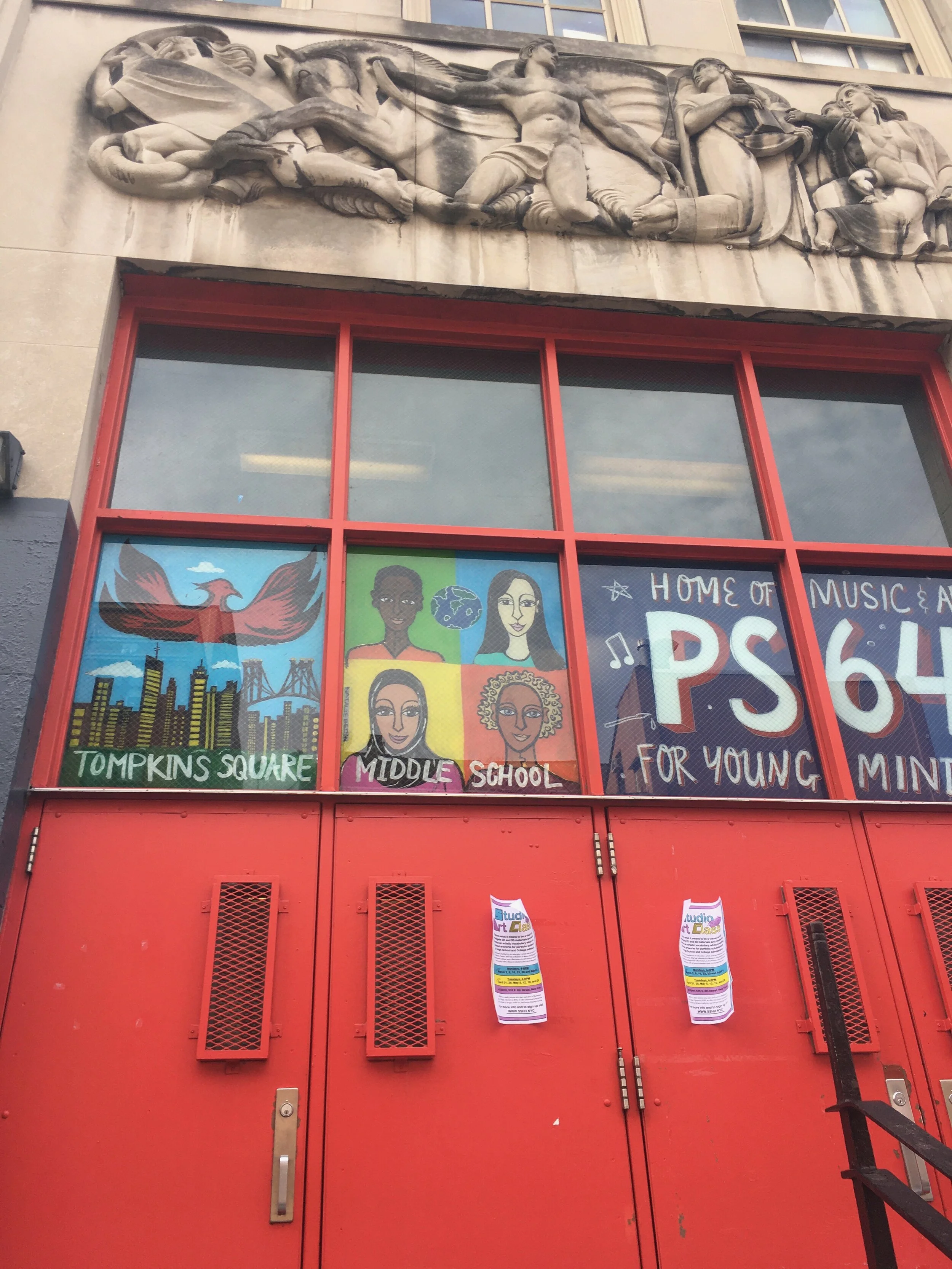
By partnering with Scholastic and with the financial support of schools’ Parent Associations, we shipped hundreds of new books to 195 K-5 grade students at East Village Community Schools and 136 6-8 grade students at (Title 1) Tompkins Square Middle School.